
Trigger warning: Sexual assault, sexual harassment, discrimination and birth trauma.
When I was 19, I was sexually assaulted.
It happened in a room full of people, and there was no way to call out or acknowledge what was going on without causing a “scene”.
I didn't report it or tell anyone at the time. In fact, it was many, many years later, after hearing other women's stories that sounded similar, that I actually recognised what had happened to me as sexual assault.
Looking back, I think I'd put it in the darkest, deepest corner of my mind, just hoping it would go away. I didn't fully realise what had happened to me until other people started talking about their own experiences.
Recent stories surrounding Russell Brand and David Walliams have triggered these memories, and this is why I'm speaking openly about my experience for the first time.
The power of speaking out
I've had mixed feelings during this last week as events have unfolded.
Part of me feels grief, sadness and anger for my younger self. That I didn't stand up for her. That I didn't make a scene.
Because actually, I should have made a scene. That was the right thing to do. That's what 48 year old me would do now and it’s what I would do if I saw it happen to someone else.
But at the time, I didn't.
I believe that silence sustains a patriarchal society that keeps women quiet, weak and small.
And I'd like to say that this is only an experience I've had, but unfortunately it’s not. I've also spoken to many women over the years who have had similar experiences. And not just sexual assault, but discrimination, abuse and physical assault too.
I've also recently found out that someone I sort of know has been sexually assaulting women. I'm not able to talk about this, but I've thought about it every day since finding out, wondering how I can help.
I don't know these women. I don't know all the people involved, and I can't simply step in. I feel totally helpless.
And I think that's another part of the problem. So many of these situations happen in workplaces, schools or other environments where people are brought together. These should be places where people feel safe, yet so often they aren't. Often these men or people are in a position of ‘power’ over the victims. We feel helpless to say anything in fear of retribution, loss of work or just being ‘difficult’.
That needs to change.
And it doesn't stop when we become mothers
Unfortunately, women can experience this in healthcare settings too, including during pregnancy, birth and the weeks that follow.
I planned a home birth in 2015 with my daughter Ellie, but after a difficult experience I was transferred to hospital. I felt very unsupported by the midwives who were there at my home and, after lots of conversation, we decided that moving to hospital was the best thing to do. Throughout the experience, I felt I wasn't being listened to. I felt overlooked, and it was only because I felt empowered to speak up that I was able to make my feelings known.
But what happened after giving birth was something I hadn’t anticipated.
I was exhausted and emotionally traumatised by the experience of the birth, when a breastfeeding support nurse entered the room. My baby was fast asleep and I was trying to rest. She entered the room, without introducing herself. She didn't ask me or my baby's name. She immediately said, "I need to see this baby feed."
I'd been feeding Ellie regularly. I'd done lots of research about breastfeeding in the run-up to giving birth and felt really proud and empowered that I'd been able to do it with her. I know breastfeeding doesn't come easily for many, many women, but I'd felt able to do it and was really pleased with how things were going.
The nurse then got hold of my daughter, grabbed my T-shirt and pulled it up, grabbed my breast and put my nipple into my baby's mouth.
She touched me without consent. She touched my baby without consent.
And then she simply turned on her heels and said, "That's great. I've seen what I need to see."
And left.
Imagine if that had been my first experience of breastfeeding. I may never have done it again. I still find it quite unbelievable that this happened. Over the past 10 years I’ve met thousands of women who have experienced the same or similar situations. There is nowhere else where it would be seen as standard practice to touch or grab another person without consent.
We need better systems in place
I feel that, to move forward, we need better systems in place.
Whether it's in a hospital, in the workplace or any other environment, there should be a clear way for you to speak up about something that has made you uncomfortable, whether that's at the time or afterwards.
Unfortunately, I know it isn't a legal requirement for businesses to have HR departments, but I believe it should be.
Many years ago, when I was pregnant, I experienced discrimination on many occasions and felt unable to do anything about it. One of the reasons was that the HR manager was the owner's wife. She'd already dismissed several of my requests around changes relating to my difficult pregnancy. Then, when I experienced further discrimination and was sexually harassed by one of my work colleagues, I didn't know who I could speak to. Who do you go to when the person responsible for HR is also closely connected to the person who owns the business?
There should be someone you can talk to, someone who can offer HR advice, help you understand your legal rights and explain what you can do to resolve a situation.
And there are some important changes happening in employment law that I think every woman and every business owner should know about.
The Employment Rights Act 2025 has introduced some significant changes to workplace protections against sexual harassment and discrimination.
Since 6 April 2026, sexual harassment has been recognised as a qualifying disclosure under whistleblowing legislation, meaning workers who report it can receive additional protection against being treated unfairly or dismissed for speaking up.
From 30 October 2026, employers have also had to take all reasonable steps to prevent sexual harassment, rather than simply reasonable steps. Importantly, employers can now also be held responsible for harassment by third parties, such as customers, clients and contractors, if they haven't taken all reasonable steps to prevent it.
And since 1 October 2026, the time limit for bringing most employment tribunal claims has increased from three months to six months (although transitional rules apply to older cases). These are positive steps forward, but we need to make sure women know their rights and that employers understand their responsibilities.
In the UK, not having an HR department does not mean you have nowhere to turn. Which is what I thought and felt back in 2015. Every employee should have a way to raise concerns about sexual harassment, sexual assault, discrimination or inappropriate behaviour, even if they work for a small business.
You can contact ACAS, seek legal advice from a solicitor, some offer free initial consultations or contact the police.
When these things happen, you shouldn't be left feeling completely on your own, trying to work out what your options are. Also it's more than likely you are not alone in this. If you have experienced this behavior others are likely to have too, whether it's in the past, now or in the future.
We need to support women who speak out
With Lucy Beaumont speaking out against David Walliams and supporting some of the women he allegedly assaulted/had inappropriate relations with, I feel that it's up to all of us to be more Lucy.
She's lifted her head above the parapet. She's put her neck on the line, even acknowledging that she may not get work after speaking out.
That takes courage.
I really believe we need to encourage and support women like Lucy, and other women who come forward, and make sure they have the support they need so that they are not silenced.
Lucy has also written a wonderful book about being a mum, which I'd urge you to go and buy. I've shared it below and in our stories.
She also has a tour coming up, and it would be great to book tickets and go and support her.
It's really important that we don't just say we support women who speak out. We need to show it.
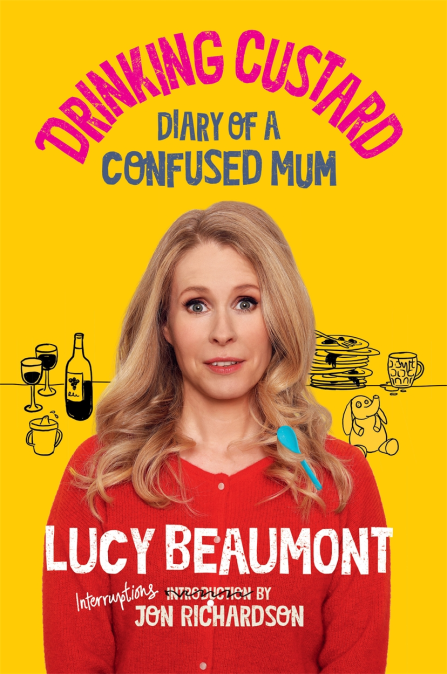
Buy Lucy’s book HERE
This is just the beginning
f you know of any women who are going through any sort of experience like this, or you yourself have experienced something similar and feel able to speak up about it, now is the time to do so.
I feel like it's a wave. In fact several waves are coming. There will be a tsunami.
These men, and anyone else who behaves in this way, need to be held accountable for their behaviour.
We need to keep supporting the women who come forward and make sure they are treated with the respect and dignity they deserve.
I hope that, for my 19-year-old self, any other women who have experienced sexual harassment, assault and discrimination that we are able to do this. If not for us, let's do it for our Daughters.
Love
Nikki x